What is Teaching the Way of Love?
Teaching the Way of Love (TWL) is a program for Catholic parents that encourages and empowers them to embrace their role as the primary educators of their children, especially in the areas of moral and personal development. The program combines the latest in parenting research with the ancient wisdom of the Catholic Church. Teaching the Way of Love quickly moves parents from theory to practice as it leads them to create practical strategies for applying what they learn to their parenting.
The program is divided into three steps. Each step targets parents with children in a specific period of development. Taken from the document Truth and Meaning in Human Sexuality, these developmental stages are the Age of Innocence, Puberty and Adolescence.
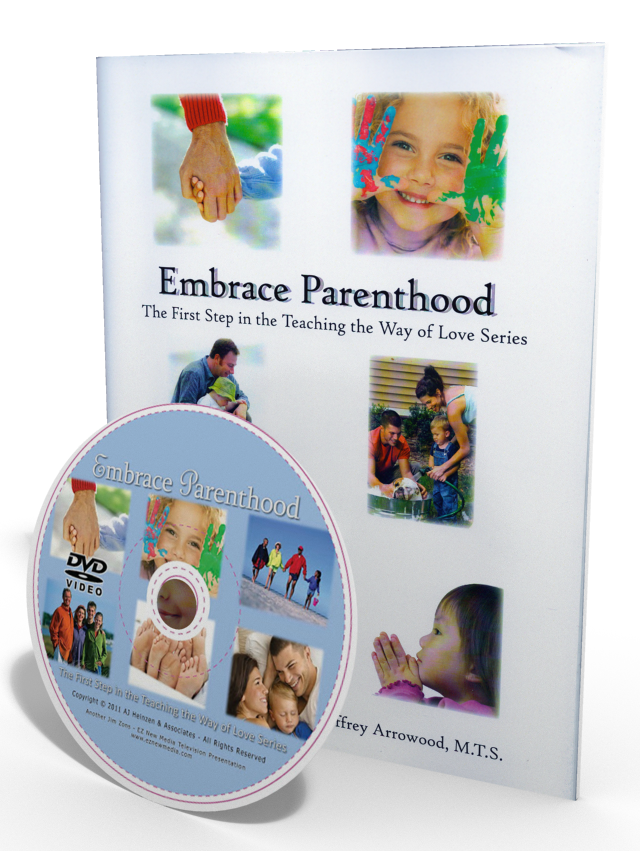
Embrace Parenthood Set

Growing in the Way of Love Set
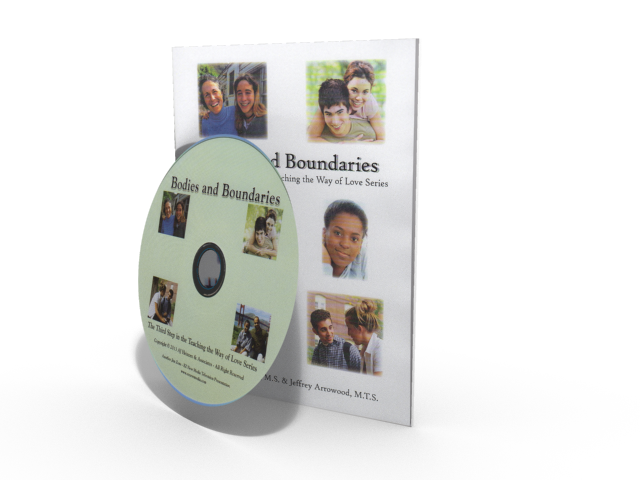
Bodies & Boundaries set
Embrace Parenthood – the first step in the Teaching the Way of Love series – targets parents of children in the age of reason. This can be anywhere from the time of baptism through the onset of puberty.
Embrace Parenthood encourages parents to embrace their role as primary educators of their children, and instructs them on nurturing habits in themselves and in their children to build a positive character and a God-centered home.
Embrace Parenthood is divided into 10 segments, labeled alphabetically A-J.
A: Authority – encourages parents to embrace the true meaning of parental authority in reflection of God’s authority – the power to lead others to authentic good that they would not or could not otherwise choose for themselves.
B: Become Family – encourages families to live out the tasks of the family laid out by Saint Pope John Paul II in Familiaris Consortio.
C: Choose Charity – encourages parents to guide their children from eros to agapé as described by Pope Benedict XVI in Deus Caritas Est.
D: Develop Virtue – teaches parents how to identify and encourage the development of the four cardinal virtues in themselves and in their children.
E: Expect Right Behavior – encourages parents to set high expectations of behavior for their children, and to set pro-active expectations rather than only reactive expectations.
F: Foster Faith – encourages parents to create an environment of faith in their homes, and to lead their children through religious practices to a dynamic devotion and love for God.
G: Give and Receive Love – sets parents up to teach the proper understanding of sexuality, and to begin teaching children to use their bodies for love rather than for selfishness.
H: Hope is Nurtured by Innocence – explains why it’s important to monitor media and other influences that enter the home. Protecting a child’s innocence goes beyond the idea of sexual purity to protecting their faith in the world and building trust in God’s goodness.
I: Imitate the Holy Family – shows how the Holy Family can be a model for how families deal with hardship and conflict. There is a focus here on the skills of conflict resolution.
J: Journey With Your Children – encourages parents to see the joys and trials in each stage of parenting and child development, and teaches them that their role as parent changes as a child grows but never goes away.
Growing in the Way of Love – the second step in the Teaching the Way of Love program for Catholic parents – targets parents whose children are entering puberty.
The focus of this step in the program is guiding children from childhood into young adulthood in all areas of life, but especially in preparing them to receive the gift of fertility.
Growing in the Way of Love is divided into 7 segments labeled alphabetically K-Q:
K: Keep it Simple – describes the “stair-step approach” to teaching about sexuality based on a child’s level of maturity found in Truth and Meaning in Human Sexuality.
L: Learn to Listen – teaches parents how to continue to nurture their relationship with their growing children by learning how to really listen to their children and to foster a relationship of openness.
M: Maturity is More Than Physical – teaches parents about their responsibility to help their children mature in all areas of human life while their bodies develop automatically.
N: Necessary Conversations – offers parents a strategy for talking about issues they may find uncomfortable.
O: One-Flesh Union – firmly grounds parents in God’s plan for human sexuality so they can be prepared to pass that teaching on to their children and builds on the conversation strategy introduced in Necessary Conversations to help parents develop a strategy for discussing sexual intercourse with their children (when their children are ready).
P: Provide the Best – encourages parents to continue forming a family environment of faith, order and celebration in order to provide what is truly best for their children.
Q: Quick Facts About Adolescence – prepares parents for this developmental stage by describing some things that happen in body and brain development and how this growth affects their relationship – and how to best respond to the changes.
Bodies & Boundaries – the third step in the Teaching the Way of Love program for Catholic parents – targets parents whose children have navigated puberty and are now moving toward adulthood.
Bodies & Boundaries helps parents to prepare themselves and their children for the transition to independent adulthood, where the role of the parent changes from “the sage on the stage” to “the guide by their side.”
However, this step also encourages parents to continue holding high standards of behavior and to be actively engaged as the parental authority in their children’s lives. Every segment of Bodies & Boundaries guides parents toward having a conversation with their children about the topic of the segment.
Bodies & Boundaries is divided into 9 segments labeled alphabetically R-Z:
R: Relationship Before Romance – encourages parents to help their children build relationship skills before getting caught up in romance and dating.
S: Self-Worth vs. Self-Esteem – helps parents guide their child’s quest for identity by focusing on their inherent self-worth as children of God, made in His image and likeness rather than on self-esteem, which is simply how a person feels about himself or herself at an emotional level.
T: Theology of the Body – introduces parents to God’s plan for human sexuality as articulated by Saint Pope John Paul II’s work Theology of the Body. This segment culminates in a discussion between parents and young people about their vocation, about marriage, and about how to take steps toward building a successful marriage.
V: Vital Discussions – this segment specifically equips parents to have conversations with young people about the virtue of chastity and how to build this virtue.
W: What Matters – encourages parents once again to focus their parenting on what is truly best for their children – a relationship with God. This segment ends with a discussion of the basics of Catholic faith so parents and young people can reaffirm their knowledge of the faith together.
X: eXplanations They Will Need – this segment guides parents to talk with their children about properly ordered sexuality, and the many forms that disordered sexualtiy can take in our lives. It offers parents a simple “litmus test” for the best expression of sexual love and a plan for discussing with young people the many ways that sexuality can fall away from God’s plan.
Y: Yes, They Will Falter – as Catholics, we know that our children are just as likely as we are to stumble and fall. The measure of good parenting is our response to our children when this happens. This segment equips parents with a plan for handling these unfortunate but not unexpected situations.
Z: Zeal to Parent – this segment encourages parents to foster the virtue of perseverance and to keep their excitement and zeal for forming their children according to God’s loving plan. This final segment of the program also prepares parents for their changing role as their children take on the responsibilities of adulthood and leave the home to attend college or life on their own.